Product Guide
7 Ultimate Tips: Choosing the Right LVP Thickness & Wear Layer
Choosing the correct **LVP Thickness and Wear Layer** is essential for long-term durability and performance. Whether you’re renovating a home or outfitting a commercial space, the right specifications ensure stability, comfort, and longevity.
1. Understanding LVP Thickness: Stability and Sound Reduction
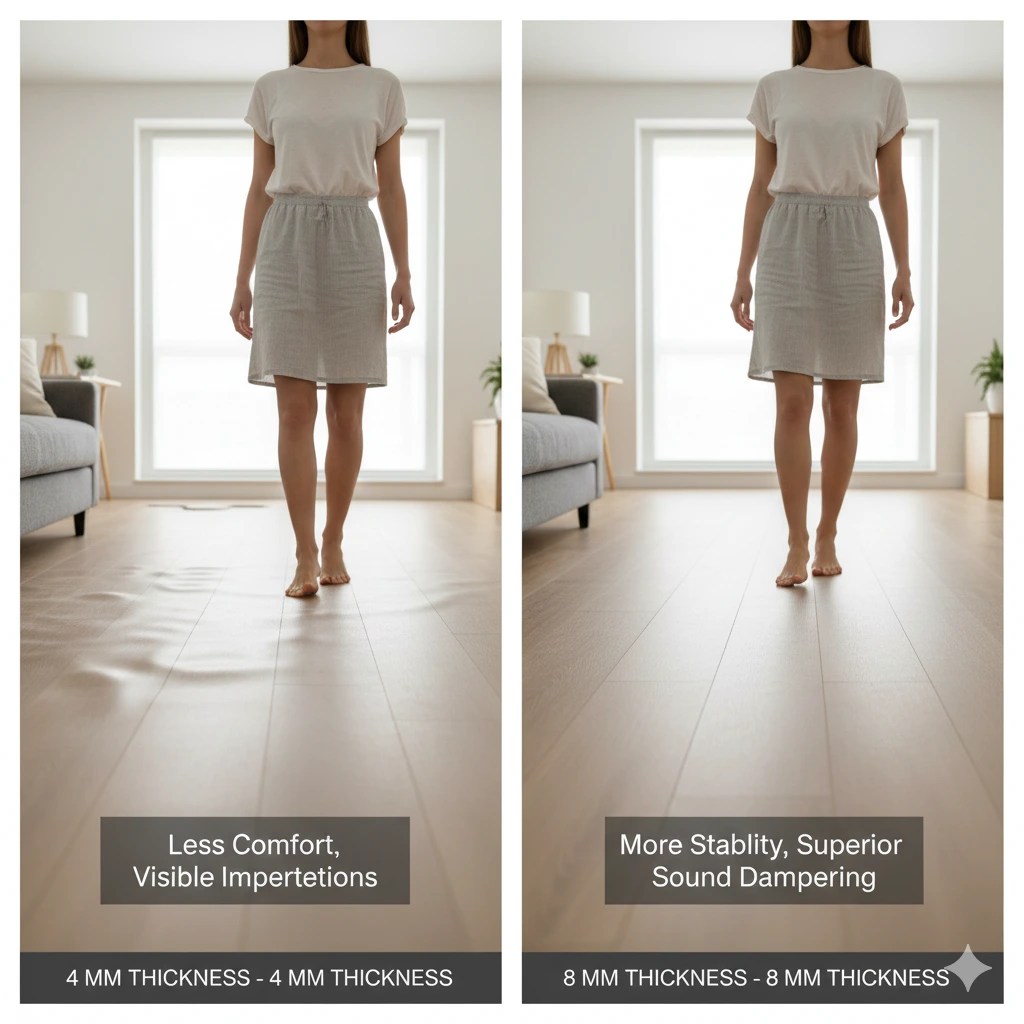
Thicker LVP flooring provides superior stability and comfort underfoot. Total plank thickness typically ranges from 4mm to 8mm, with the best quality products occupying the higher end of this scale. Areas with high foot traffic benefit immensely from thicker planks, which offer several key advantages:
- **Sound Absorption:** Planks 6mm and thicker provide better sound insulation, significantly reducing the hollow sound often associated with vinyl flooring, making them ideal for multi-level buildings.
- **Subfloor Forgiveness:** The extra thickness helps to bridge minor subfloor imperfections and subtle dips more effectively, reducing the need for extensive and costly subfloor preparation.
- **Enhanced Feel:** Thicker planks offer a more solid, substantial feel underfoot, mimicking the density of traditional wood flooring.
2. Wear Layer Importance: The Ultimate Shield Against Damage
The wear layer is the single most critical factor determining your floor’s long-term resistance to scratches, dents, and stains. This transparent layer is measured in mil (thousandths of an inch). When discussing **LVP Thickness and Wear Layer**, prioritize the latter for maximum durability:
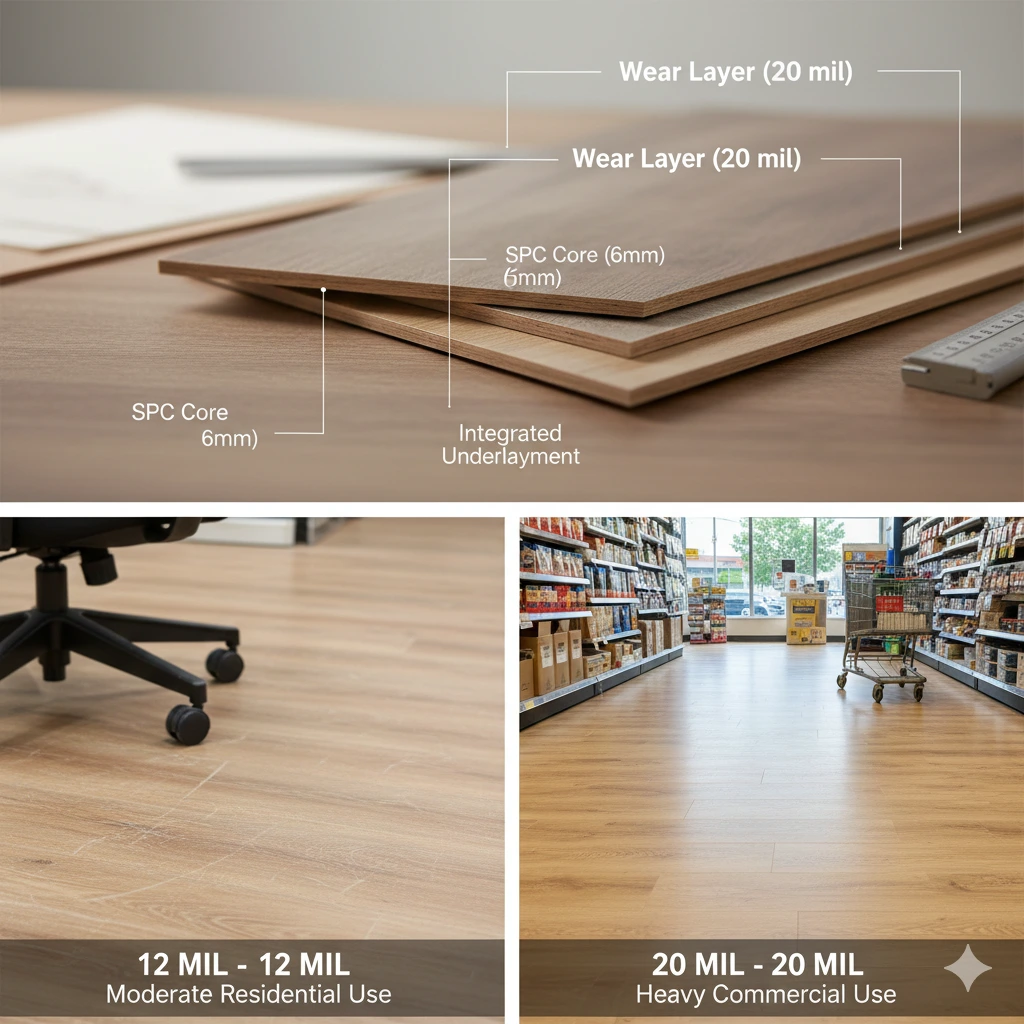
- **Standard Residential (Low Traffic):** A **12-mil wear layer** is generally sufficient for bedrooms and formal living areas.
- **Active Residential (Kitchens/Halls):** A **20-mil wear layer** is the gold standard for most family homes, providing excellent resistance against pets and dropped items.
- **Commercial/Rental:** A **22-mil or 28-mil wear layer** is essential for heavy-traffic stores, offices, and rental properties where traffic intensity is unpredictable.
The Ultimate Trade-Off: When balancing **LVP Thickness and Wear Layer**, remember that thickness determines feel and sound, while the wear layer determines the floor’s durability and scratch resistance. Do not sacrifice a high wear layer for plank thickness.
3. Matching Specs to Your Project Type
The choice between different **LVP Thickness and Wear Layer** combinations should always be guided by the room’s function and expected usage:
- **Commercial & Rental Properties (Tip 3):** These environments require the strongest specs. Opt for 8mm thickness and a minimum 20-mil wear layer to withstand foot traffic and frequent furniture rearrangement.
- **Moisture-Prone Areas (Tip 4):** Ensure the LVP has a solid SPC (Stone Plastic Composite) core for 100% waterproofing. A 6mm thickness helps ensure stability against minor subfloor condensation issues prevalent in basements.
- **Homes with Pets & Kids (Tip 5):** The surface protection is paramount. Invest in a 20-mil wear layer or higher to prevent scratches from pet claws and minimize damage from spills and toys.
4. Underlayment and Installation Considerations
Optimal comfort and performance depend not only on the **LVP Thickness and Wear Layer** but also on how the flooring is installed and supported:
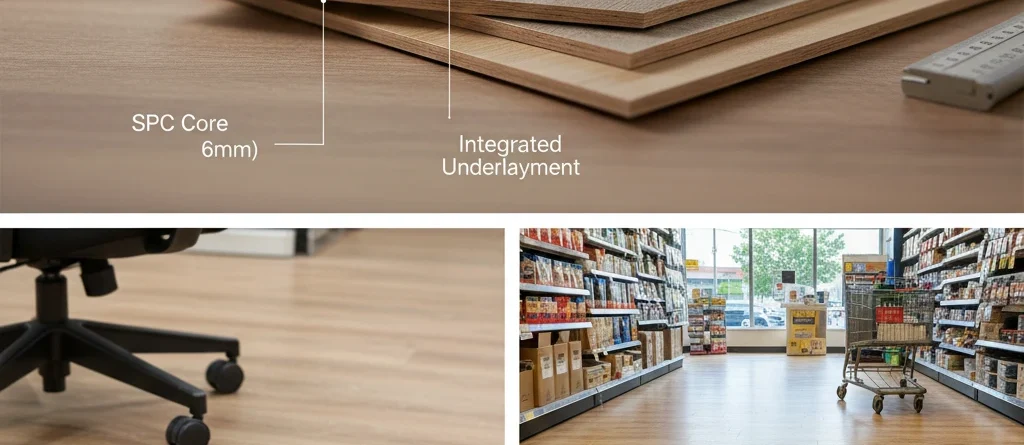
- **Built-In Underlayment (Tip 6):** Many premium LVP planks (6mm and above) feature an attached foam or cork backing. This built-in underlayment significantly boosts sound insulation and adds extra cushion, eliminating the need for a separate purchase and simplifying the installation process.
- **Installing Over Existing Floors (Tip 7):** If installing LVP over existing hard surfaces (like old tile), choosing a plank with 7mm or 8mm thickness is highly beneficial. The greater mass helps minimize the “telegraphing” effect of visible grout lines and subtle unevenness, ensuring a smoother final surface.
Ultimately, a higher quality **LVP Thickness and Wear Layer** will extend the lifespan of your flooring and ensure better acoustic and thermal insulation, leading to greater long-term satisfaction and a reduction in replacement costs.
External Reference
Explore more from industry sources:
Explore Types of Vinyl Flooring from Industry Sources
Frequently Asked Questions (FAQ)
What is the ultimate thickness for LVP?
6mm to 8mm total thickness is widely considered the ultimate range for high-end residential and light commercial use, offering the best balance of stability, sound reduction, and comfort.
How important is the wear layer?
It is the most important factor. It determines the floor’s resistance to scratches, dents, and overall durability. A 20-mil wear layer is the standard recommendation for durability.
Can thicker LVP reduce noise?
Yes, planks over 6mm, especially those with built-in underlayment, offer significantly better sound insulation and acoustic performance compared to thinner alternatives.
Is a 20-mil wear layer necessary?
It is necessary for rentals, commercial spaces, and busy homes with pets. While 12-mil is acceptable for low-traffic areas, 20-mil provides the longevity most homeowners desire.
Does thickness affect installation?
Yes, thicker planks (7mm+) are often easier for DIY installation because they are less flexible and more forgiving of minor subfloor imperfections.